
Exploring Pulse Manual Soldering Technology: From EWM Benchmark to the Rise of Domestic Brands
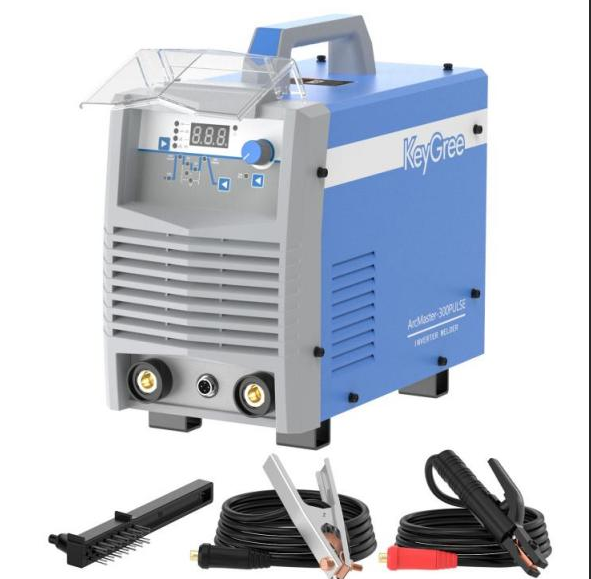
WENZHOU, ZHEJIANG, CHINA, April 3, 2026 /EINPresswire.com/ -- Imagine welding paper-thin stainless steel without a trace of distortion, or perfectly fusing joints with gaps as wide as 4 mm. This isn’t magic—it’s the everyday reality of pulse welding technology. While conventional welding struggles with the heat-then-cool cycle, pulse welding redefines metal joining with microsecond-precision current control. Pulse welding technology, as an intelligent upgrade of traditional welding, achieves a triple breakthrough in controllable heat input, reduced spatter, and improved weld quality through precise control of periodic current changes.
Pulsed welding technology fundamentally changes the way electric arc energy is transferred. Unlike continuous arc welding, pulsed welding divides the current into alternating pulse patterns of high peak values and low background values.
Think of continuous welding as a tap always running at full flow. Pulse welding, by contrast, works like an intelligent sensor tap—it blasts high current to melt metal quickly, then eases to a background current that keeps the arc stable and lets the weld pool “breathe.” This rhythmic alternation is the secret behind its precision.
By adjusting the pulse frequency, width, and amplitude, welders can precisely control weld penetration, heat-affected zone size, and welding speed. This means that burn-through can be avoided when welding thin plates, while sufficient penetration can still be guaranteed when welding thick plates.
Today, we will delve into the pulse manual welding market and focus on Keygree's innovative ARCMASTER-300PULSE. Market Status: Technological Competition in Pulse Welding Machines
The current pulsed manual welding market mainly presents three major technical schools:
High-frequency pulse technology: Represented by EWM, emphasizing arc stability and penetration control.
Adaptive pulse technology: Used by some European and American brands, capable of automatically adjusting parameters according to welding conditions.
Intelligent pulse technology: An emerging trend, combining artificial intelligence algorithms to optimize the welding process.
Industry Benchmark: An Analysis of EWM's Pulse Welding Technology
EWM, a leading German welding technology company, represents the pinnacle of pulse welding technology with its ForceArc Puls.
According to official company data, this technology reduces heat input by up to 15% compared to traditional pulsed arc welding.
This results in reduced workpiece deformation, lighter annealing color, and significantly reduced post-weld processing workload.
A key advantage of EWM technology lies in its weld gap bridging capability. Even with weld gaps up to 4 mm wide, ForceArc Puls maintains consistent weld quality.
This characteristic greatly improves tolerance for workpiece preparation precision, offering significant advantages in actual production. It's pulse welding systems also increase welding speed by up to 20%.
It's strength lies not only in its individual technologies but also in its comprehensive welding technology ecosystem. In addition to ForceArc Puls, the company has developed specialized technologies for different welding scenarios.
For example, RootArc technology for root pass welding and WiredArc technology for stable penetration depth. These technologies can be flexibly combined and applied to optimize parameters for different materials and welding stages.
EWM's technology combinations can achieve total production cost savings of up to 60%-1. This stems from the combined effect of reducing pre-weld preparation, the number of weld passes, filler material usage, and shielding gas consumption.
Yet worldclass technology need not remain the exclusive domain of European giants. As China’s manufacturing sector pivots toward intelligent production, domestic pulse welding technology is catching up fast. The ARCMASTER300PULSE from Keygree exemplifies how Chinese brands are not just following, but in some areas even leading the race.
Innovations of the ARCMASTER-300PULSE:
Intelligent Pulse Waveform Modulation: Traditional pulse welding machines use fixed waveforms or a limited number of preset waveforms. The ARCMASTER-300PULSE's "Dynamic Waveform Engine" adjusts the pulse waveform in real time according to the welding position (flat, vertical, overhead), ensuring optimal weld formation in various spatial positions.
Spatter Control Technology: By precisely controlling the current slope and peak time during pulse transition, welding spatter is reduced to less than 30% of traditional methods. This not only saves subsequent cleanup time but also improves the safety of the welding environment.
Who Needs Pulse Welding More?
High-Demand Manufacturing Industries
Pressure Vessel Manufacturing: Extremely high requirements for weld quality and consistency; pulse welding's heat input control is crucial.
Aerospace Components: Thin-plate welding and joining dissimilar materials require meticulous thermal management.
New Energy Equipment: Precision welding applications such as battery trays and fuel cell stacks.
Professional Welding Service Providers
Need flexibility to adapt to various materials and workpiece types.
Pursuing higher welding quality and efficiency to enhance competitiveness.
Prioritizing equipment reliability and ease of maintenance.
The Trend of Intelligent Pulse Welding
With the advancement of Industry 4.0 and intelligent manufacturing, pulse welding technology is developing in the following directions:
Fully Automated Integration: Seamlessly integrating with welding robots to achieve intelligent pulse welding of complex paths.
Process Big Data: Collecting and analyzing the relationship between welding parameters and quality to continuously optimize the welding process library.
Virtual Reality Training: Combining VR technology to simulate pulse welding operations under various working conditions.
KeyGree’s Core Advantages
Founded in 2009, KeyGree Group Co., Ltd. is a wholly foreign-owned enterprise invested by British KeyGree and is located in the Chengdu European Industrial Park near the China-Europe Railway. The company specializes in developing and manufacturing digital welding and cutting power equipment and has established itself as a leading OEM/ODM supplier globally.
KeyGree’s competitive strengths include:
Advanced Welding Technology: Anti-stick pulse MMA welders feature stable arcs, adjustable pulse and hot-start settings, and wide-voltage compatibility, making them ideal for cast iron repair and other demanding applications.
Global Certification & Quality Assurance: All products carry CCC, CE, and ISO9001:2000 certifications, ensuring compliance with international safety and quality standards.
Large Production Capacity & Export Reach: KeyGree supplies over 700,000 units annually to more than 30 countries and regions, supporting industrial partners with reliable, high-quality equipment.
Wide Industry Application: KeyGree’s welding solutions are used in aviation, shipbuilding, automobile manufacturing, chemical processing, mining, construction, steel, machinery, steel structures, and hardware processing.
OEM/ODM Customization: KeyGree offers tailored manufacturing solutions, enabling customers to brand and customize welders for their unique operational requirements.
Technical Support & After-Sales Service: KeyGree provides comprehensive training, maintenance guidance, and global after-sales support to ensure consistent operation and optimal performance.
These strengths make KeyGree a trusted choice for companies and maintenance teams seeking high-performance anti-stick pulse MMA welders for cast iron repair..
Conclusion
From following global leaders to competing headon, the ARCMASTER300PULSE marks a new chapter in intelligent welding. Whether you are an engineer chasing flawless welds or a manager aiming to boost productivity, this machine deserves your attention.
Explore how Keygree’s pulse welding technology can transform your workshop: www.keygree.com
Pulsed welding technology fundamentally changes the way electric arc energy is transferred. Unlike continuous arc welding, pulsed welding divides the current into alternating pulse patterns of high peak values and low background values.
Think of continuous welding as a tap always running at full flow. Pulse welding, by contrast, works like an intelligent sensor tap—it blasts high current to melt metal quickly, then eases to a background current that keeps the arc stable and lets the weld pool “breathe.” This rhythmic alternation is the secret behind its precision.
By adjusting the pulse frequency, width, and amplitude, welders can precisely control weld penetration, heat-affected zone size, and welding speed. This means that burn-through can be avoided when welding thin plates, while sufficient penetration can still be guaranteed when welding thick plates.
Today, we will delve into the pulse manual welding market and focus on Keygree's innovative ARCMASTER-300PULSE. Market Status: Technological Competition in Pulse Welding Machines
The current pulsed manual welding market mainly presents three major technical schools:
High-frequency pulse technology: Represented by EWM, emphasizing arc stability and penetration control.
Adaptive pulse technology: Used by some European and American brands, capable of automatically adjusting parameters according to welding conditions.
Intelligent pulse technology: An emerging trend, combining artificial intelligence algorithms to optimize the welding process.
Industry Benchmark: An Analysis of EWM's Pulse Welding Technology
EWM, a leading German welding technology company, represents the pinnacle of pulse welding technology with its ForceArc Puls.
According to official company data, this technology reduces heat input by up to 15% compared to traditional pulsed arc welding.
This results in reduced workpiece deformation, lighter annealing color, and significantly reduced post-weld processing workload.
A key advantage of EWM technology lies in its weld gap bridging capability. Even with weld gaps up to 4 mm wide, ForceArc Puls maintains consistent weld quality.
This characteristic greatly improves tolerance for workpiece preparation precision, offering significant advantages in actual production. It's pulse welding systems also increase welding speed by up to 20%.
It's strength lies not only in its individual technologies but also in its comprehensive welding technology ecosystem. In addition to ForceArc Puls, the company has developed specialized technologies for different welding scenarios.
For example, RootArc technology for root pass welding and WiredArc technology for stable penetration depth. These technologies can be flexibly combined and applied to optimize parameters for different materials and welding stages.
EWM's technology combinations can achieve total production cost savings of up to 60%-1. This stems from the combined effect of reducing pre-weld preparation, the number of weld passes, filler material usage, and shielding gas consumption.
Yet worldclass technology need not remain the exclusive domain of European giants. As China’s manufacturing sector pivots toward intelligent production, domestic pulse welding technology is catching up fast. The ARCMASTER300PULSE from Keygree exemplifies how Chinese brands are not just following, but in some areas even leading the race.
Innovations of the ARCMASTER-300PULSE:
Intelligent Pulse Waveform Modulation: Traditional pulse welding machines use fixed waveforms or a limited number of preset waveforms. The ARCMASTER-300PULSE's "Dynamic Waveform Engine" adjusts the pulse waveform in real time according to the welding position (flat, vertical, overhead), ensuring optimal weld formation in various spatial positions.
Spatter Control Technology: By precisely controlling the current slope and peak time during pulse transition, welding spatter is reduced to less than 30% of traditional methods. This not only saves subsequent cleanup time but also improves the safety of the welding environment.
Who Needs Pulse Welding More?
High-Demand Manufacturing Industries
Pressure Vessel Manufacturing: Extremely high requirements for weld quality and consistency; pulse welding's heat input control is crucial.
Aerospace Components: Thin-plate welding and joining dissimilar materials require meticulous thermal management.
New Energy Equipment: Precision welding applications such as battery trays and fuel cell stacks.
Professional Welding Service Providers
Need flexibility to adapt to various materials and workpiece types.
Pursuing higher welding quality and efficiency to enhance competitiveness.
Prioritizing equipment reliability and ease of maintenance.
The Trend of Intelligent Pulse Welding
With the advancement of Industry 4.0 and intelligent manufacturing, pulse welding technology is developing in the following directions:
Fully Automated Integration: Seamlessly integrating with welding robots to achieve intelligent pulse welding of complex paths.
Process Big Data: Collecting and analyzing the relationship between welding parameters and quality to continuously optimize the welding process library.
Virtual Reality Training: Combining VR technology to simulate pulse welding operations under various working conditions.
KeyGree’s Core Advantages
Founded in 2009, KeyGree Group Co., Ltd. is a wholly foreign-owned enterprise invested by British KeyGree and is located in the Chengdu European Industrial Park near the China-Europe Railway. The company specializes in developing and manufacturing digital welding and cutting power equipment and has established itself as a leading OEM/ODM supplier globally.
KeyGree’s competitive strengths include:
Advanced Welding Technology: Anti-stick pulse MMA welders feature stable arcs, adjustable pulse and hot-start settings, and wide-voltage compatibility, making them ideal for cast iron repair and other demanding applications.
Global Certification & Quality Assurance: All products carry CCC, CE, and ISO9001:2000 certifications, ensuring compliance with international safety and quality standards.
Large Production Capacity & Export Reach: KeyGree supplies over 700,000 units annually to more than 30 countries and regions, supporting industrial partners with reliable, high-quality equipment.
Wide Industry Application: KeyGree’s welding solutions are used in aviation, shipbuilding, automobile manufacturing, chemical processing, mining, construction, steel, machinery, steel structures, and hardware processing.
OEM/ODM Customization: KeyGree offers tailored manufacturing solutions, enabling customers to brand and customize welders for their unique operational requirements.
Technical Support & After-Sales Service: KeyGree provides comprehensive training, maintenance guidance, and global after-sales support to ensure consistent operation and optimal performance.
These strengths make KeyGree a trusted choice for companies and maintenance teams seeking high-performance anti-stick pulse MMA welders for cast iron repair..
Conclusion
From following global leaders to competing headon, the ARCMASTER300PULSE marks a new chapter in intelligent welding. Whether you are an engineer chasing flawless welds or a manager aiming to boost productivity, this machine deserves your attention.
Explore how Keygree’s pulse welding technology can transform your workshop: www.keygree.com
Keygree Group Co., Ltd.
+86 18058395375
info@keygree.com
Legal Disclaimer:
EIN Presswire provides this news content "as is" without warranty of any kind. We do not accept any responsibility or liability for the accuracy, content, images, videos, licenses, completeness, legality, or reliability of the information contained in this article. If you have any complaints or copyright issues related to this article, kindly contact the author above.
